
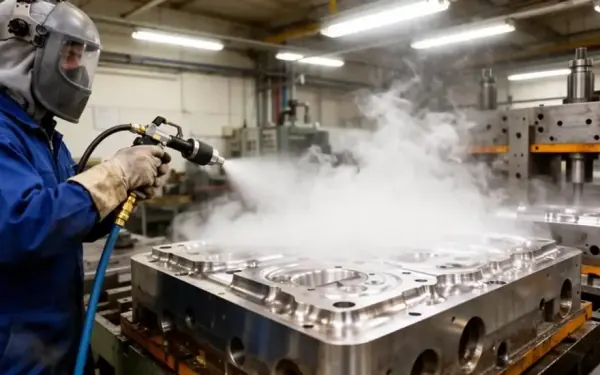
Industrial Equipment Cleaning
Plant managers care about avoiding disassembly, avoiding water near electrical systems, and minimizing production downtime. We blast in place.
Surfaces, substrates, and equipment
- Conveyors, gearboxes, motors
- Molds, dies, presses
- Electrical cabinets and bus bars
- Process machinery and tanks
- Paint lines and overspray
Technical, not marketing
Industrial cleaning in a working plant is a logistics problem first and a chemistry problem second. The wrong cleaning method can damage substrates, soak electronics, contaminate adjacent processes, or pull a critical asset offline for hours longer than the schedule allows. Summit Cryo's mobile dry ice blasting eliminates the trade-off: equipment stays in place, electrical systems stay dry, and the cleaning waste is a vapor — not a slurry.
Our crews work to documented site safety plans. We coordinate with maintenance, EHS, and production to schedule around shift changes, lockout/tagout windows, and confined-space requirements. Every job is photographed before, during, and after so your reliability team has a clean record for the CMMS and your EHS team has documentation for audits.
Most of our industrial customers run on a recurring cadence — quarterly molds, monthly conveyors, annual electrical cabinets — because scheduled cleaning is dramatically cheaper per asset than reactive deep cleans after a contamination event or unplanned shutdown.
Weighing this against your current process? See dry ice blasting vs. sandblasting, soda blasting and pressure washing before you spec the scope.
What working with us looks like
We walk the assets with you before quoting, then send a written scope so there is no ambiguity about what is and isn't included.
We run a test patch on the actual substrate before committing to the full job, so you can see the result before we proceed.
We work inside your maintenance window, subject to site access and ventilation requirements — not the other way around.
Every job closes with a photo record and a time log, so you have documentation on file for your own records.
More photographs from Summit Cryo jobs, plus illustrative examples of where the method is used, are on the gallery.
Full galleryPredictable. Documented. Fast.
How a industrial equipment cleaning day runs
- A self-contained mobile rig — compressor, blaster, dry ice supply, hoses and PPE. We need parking and a route to the work area.
- A pre-start walk-through with your maintenance, safety or site lead to confirm the asset list, access and work window.
- Your lockout/tagout, permit and site rules apply. Isolation of equipment is decided by your people, not by us.
- Containment set around the work zone, with ventilation and CO₂ monitoring planned in for indoor or enclosed areas.
- Blast noise near the nozzle, so adjacent staff are briefed and the area is controlled while work is underway.
- Displaced contaminant is collected and handled per your site's waste protocol; the dry ice itself sublimates to CO₂ gas.
Photo logs and scope sheets
- Photo log — before, during and after photos of the assets and areas cleaned.
- Scope sheet — the assets, inclusions, exclusions and site requirements agreed before work begins.
- Notes on anything observed during the clean that your maintenance team may want to follow up on.
CO₂, noise, PPE and site controls
Dry ice sublimates to carbon dioxide, so ventilation and CO₂ monitoring are part of the scope for any indoor, enclosed or low-lying work area. Crews wear insulated gloves, eye and face protection and hearing protection, with respiratory protection when the contaminant calls for it.
Hazardous materials such as lead, asbestos, silica or biohazards are not disturbed without a licensed abatement contractor engaged.
CO₂ exposure and OSHA safety guideIndustrial Equipment Cleaning: questions buyers ask us
Where this work lands
Available across the Mountain West & Northern Plains
Request a Site Walk
Send the asset, buildup, location and photos. We review the details and follow up with a written scope.