

Fleet & Heavy Equipment Cleaning
Scheduled, predictable, recurring cleaning that's low-abrasion on painted surfaces, decals, and sensitive components.
Surfaces, substrates, and equipment
- Truck engines and undercarriages
- Excavators, loaders, dozers
- Skid steers and attachments
- Municipal and ag equipment
- Trailers and fifth wheels
Technical, not marketing
Fleet cleaning is usually done with a pressure-wash bay and reclaim, or with degreaser and high-pressure water in the yard. Each method suits some assets and scopes better than others. Dry ice blasting differs in its inputs: no process water and no abrasive media. How paint, decals and aluminium respond still depends on their condition and on the settings used, which is why a test patch on a representative unit comes before the full scope.
We run scheduled route days into your yard. How many units a route day covers depends entirely on unit size, condition, access and the agreed scope — it is set in the written estimate, not assumed in advance. Maintenance teams schedule blasting between PMs so technicians can actually see leaks, cracks, and worn components — clean equipment makes inspections faster and better.
Recurring route days are priced in the written estimate against your fleet roster and cadence, like any other scope. We pre-schedule route days against your PM calendar, confirm the day in advance, and leave a completion record per unit (VIN/asset tag, surface, condition notes, photo).
What a fleet or equipment clean actually covers
The answers shop managers ask for before booking a yard day, so the scope is clear before anyone drives anywhere.
- Which assets and surfaces?
- Compatible surfaces on trucks, trailers, loaders, dozers, skid steers, ag machines and shop assets: chassis and frame rails, crossmembers, axle housings, driveline, engine bays, radiators and coolers, hydraulic valve banks and equipment exteriors.
- Which contaminants?
- Grease and oil, carbon, road salt residue, hard-packed soil and crop residue. Substrate compatibility — paint, decals, wiring looms, seals and sensors — is confirmed with a test patch on a representative unit before a full day or a route is scheduled.
- What do you need from us?
- Photos of the buildup, an asset count, where the units sit and how we reach them, your access window, and your lockout/tagout and shop rules. Indoor bays and enclosures need ventilation and CO₂ monitoring planned into the scope.
- How is it quoted?
- A site review, then a written scope and quote covering inclusions, exclusions, site requirements and the total. Nothing is committed before you have that in front of you.
Not included in this scope
- Coating removal, paint stripping, rust or corrosion repair, and refinishing
- Any promise that a unit is returned to service by a given time — readiness depends on site conditions and the agreed work plan
- Work on energised or un-immobilised equipment: units are cleaned de-energised under your own lockout/tagout and shop rules
- Hazardous materials — lead, asbestos, silica, PCBs, biohazard — without a licensed abatement contractor engaged
- Held dates, capacity or deposits before the written scope is agreed
How the estimate is produced
We do not sell instant online pricing. Every job is confirmed in a written estimate after we review the scope.
Flathead Valley: 2 hrs $800 + $250 mobilization · 4 hrs $1,400 · 8 hrs $2,400 · Outside the valley: $350/hr plus travel, 1-day minimum.
Every written estimate confirms travel and mobilization, dry ice, access, ventilation and CO₂ controls, isolation, containment, teardown, site controls, exclusions, and the total.
Next: Recurring and offseason programs — if the same machines need a repeating schedule rather than a single day.
What working with us looks like
We walk the assets with you before quoting, then send a written scope so there is no ambiguity about what is and isn't included.
We run a test patch on the actual substrate before committing to the full job, so you can see the result before we proceed.
We work inside your maintenance window, subject to site access and ventilation requirements — not the other way around.
Every job closes with a photo record and a time log, so you have documentation on file for your own records.
A vehicle chassis, photographed from several angles
Dry Ice Blasting: Actual Vehicle-Chassis Job Photos | Summit Cryo · uploaded 2026-09-09 · 32 seconds · on the Summit Surface Partners + Summit Cryo channel.
Video summary
A 32-second sequence of still photographs from an actual Summit Cryo vehicle-chassis job, shown from several angles.
The frames step through frame rails, crossmembers, the axle housing and driveline area, and spring-hanger brackets — the same underbody areas a shop inspects for leaks, cracks and wear.
It is a photo sequence, not moving job footage, and it carries no measured result. Every chassis differs; what a given vehicle looks like after cleaning depends on its condition, substrate and the agreed scope.
Photos from Summit Cryo crews
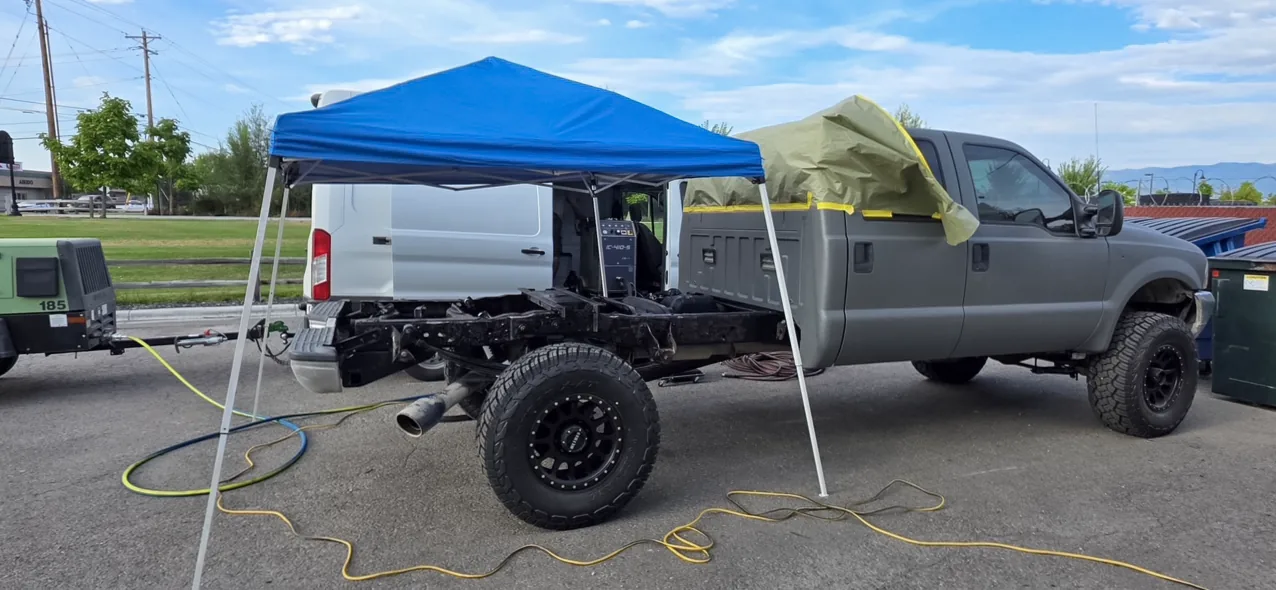
Bed-off chassis work bay 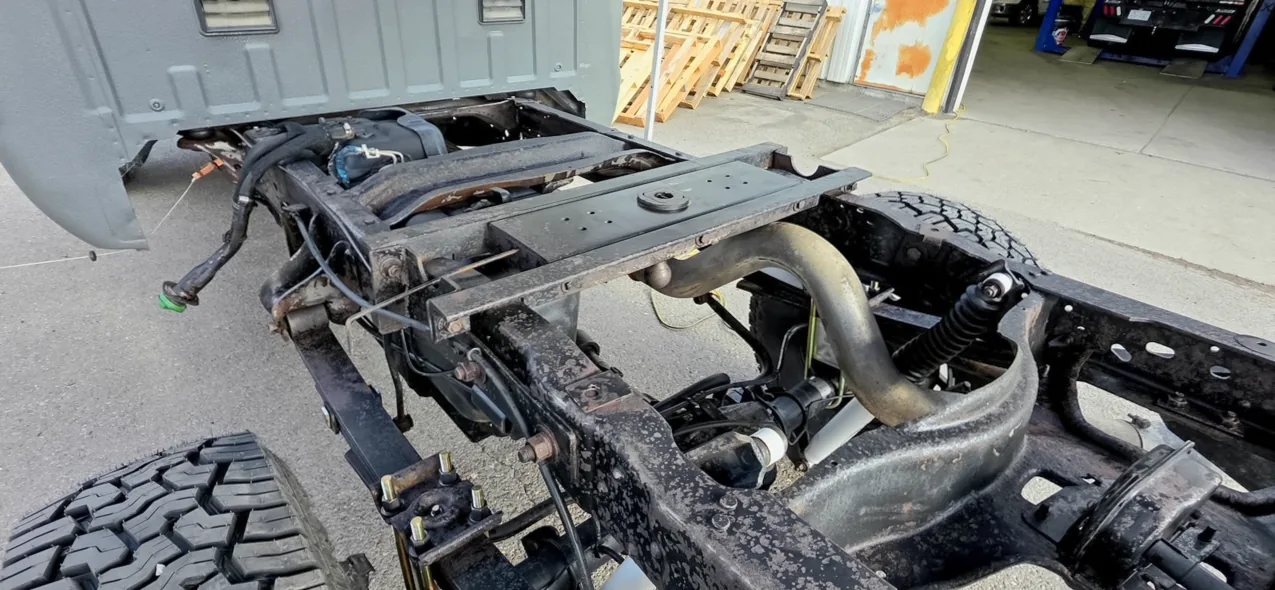
Frame and crossmembers, overhead view 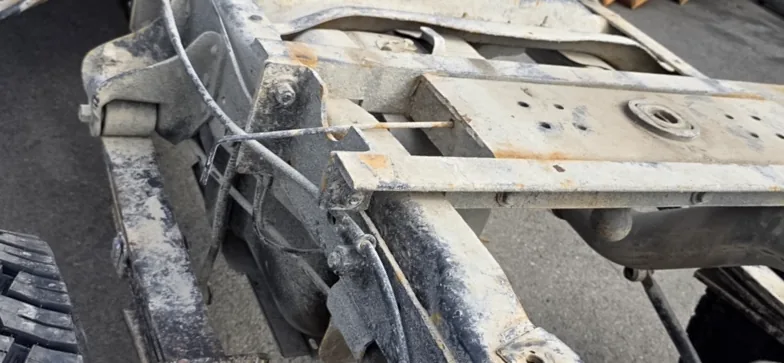
Frame rails with road-salt buildup 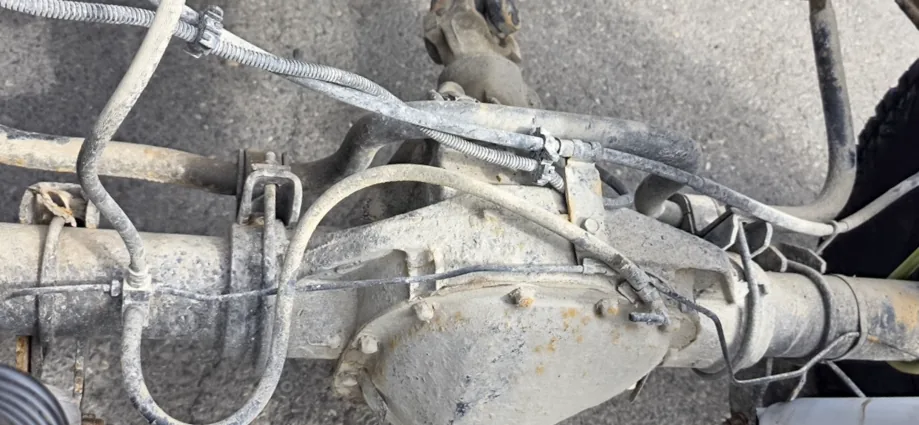
Front axle housing and lines 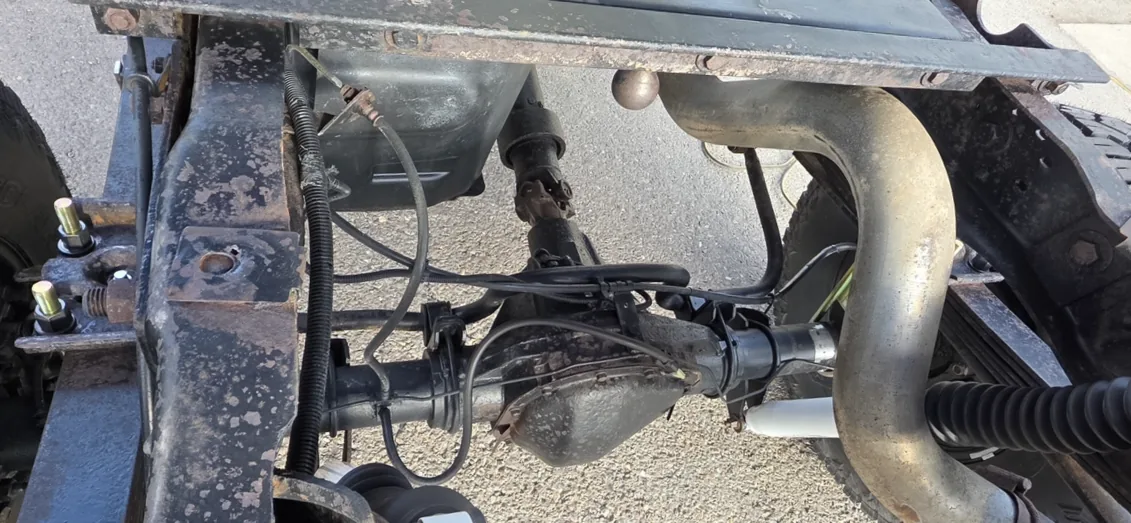
Rear axle and driveline 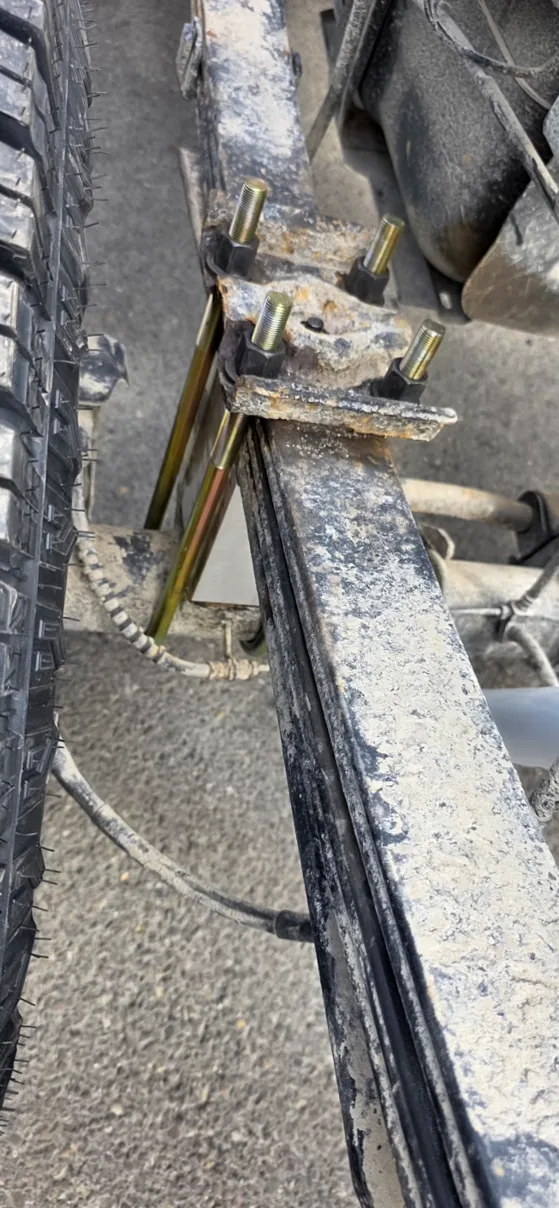
Leaf-spring hanger area 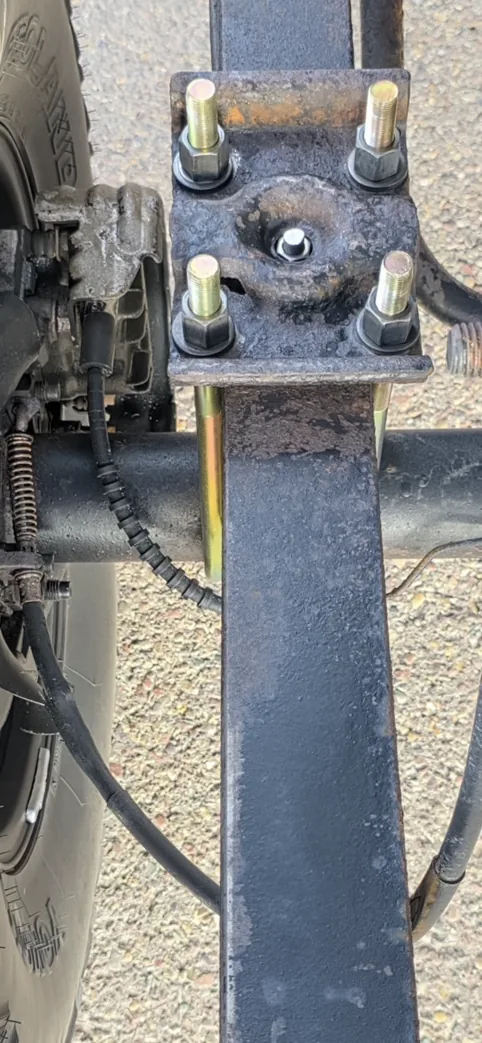
Spring hanger bracket, cleaned frame
More photographs from Summit Cryo jobs, plus illustrative examples of where the method is used, are on the gallery.
Full galleryPredictable. Documented. Fast.
How a fleet & heavy equipment cleaning day runs
- A self-contained mobile rig — compressor, blaster, dry ice supply, hoses and PPE. We need parking and a route to the work area.
- A pre-start walk-through with your maintenance, safety or site lead to confirm the asset list, access and work window.
- Your lockout/tagout, permit and site rules apply. Isolation of equipment is decided by your people, not by us.
- Containment set around the work zone, with ventilation and CO₂ monitoring planned in for indoor or enclosed areas.
- Blast noise near the nozzle, so adjacent staff are briefed and the area is controlled while work is underway.
- Displaced contaminant is collected and handled per your site's waste protocol; the dry ice itself sublimates to CO₂ gas.
Photo logs and scope sheets
- Photo log — before, during and after photos of the assets and areas cleaned.
- Scope sheet — the assets, inclusions, exclusions and site requirements agreed before work begins.
- Notes on anything observed during the clean that your maintenance team may want to follow up on.
CO₂, noise, PPE and site controls
Dry ice sublimates to carbon dioxide, so ventilation and CO₂ monitoring are part of the scope for any indoor, enclosed or low-lying work area. Crews wear insulated gloves, eye and face protection and hearing protection, with respiratory protection when the contaminant calls for it.
Hazardous materials such as lead, asbestos, silica or biohazards are not disturbed without a licensed abatement contractor engaged.
CO₂ exposure and OSHA safety guideFleet & Heavy Equipment Cleaning: questions buyers ask us
Where this work lands
Available across the Mountain West & Northern Plains
Schedule a Route Day
Send the asset, buildup, location and photos. We review the details and follow up with a written scope.