
Food Plant & Commercial Kitchen Cleaning
No chemical residue of its own. No process water introduced into sensitive environments. A documented mechanical cleaning step — fit within your SSOP and HACCP plan is your QA team's call, not ours.
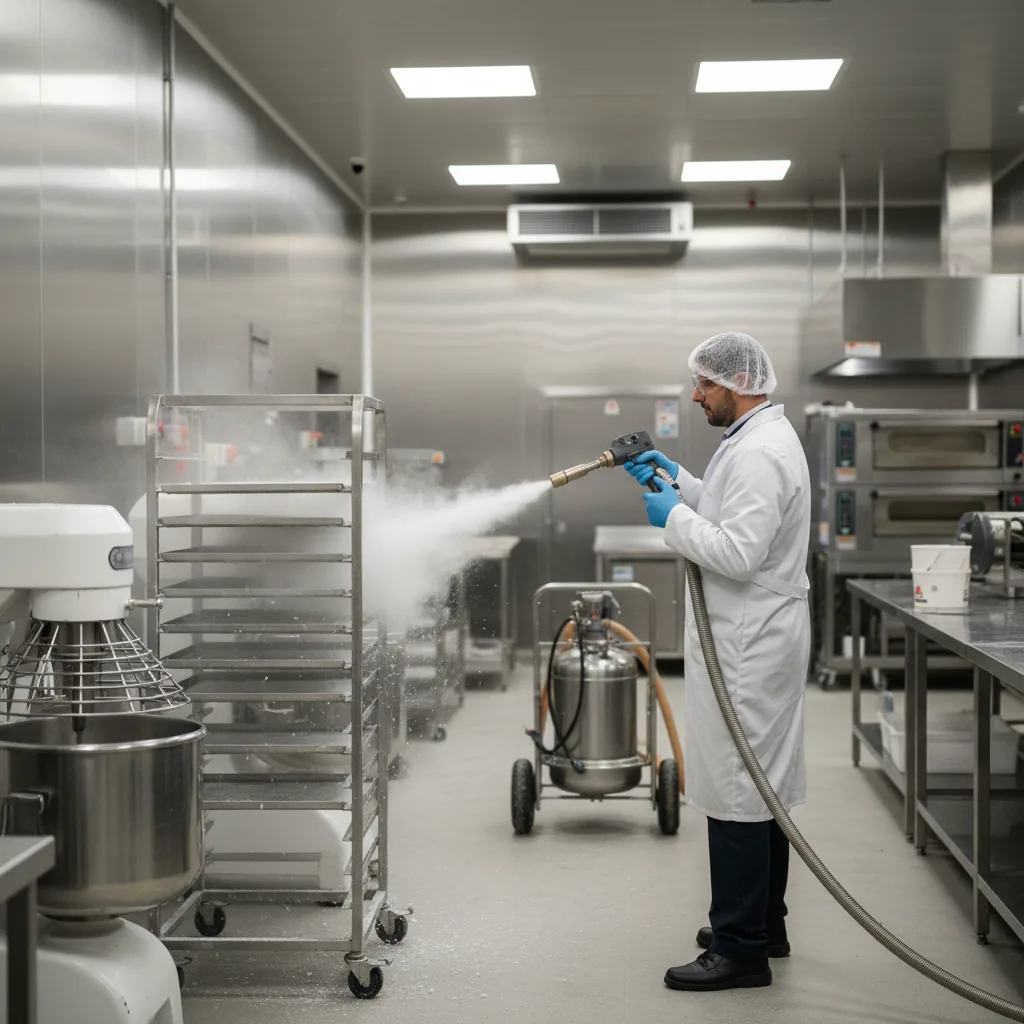
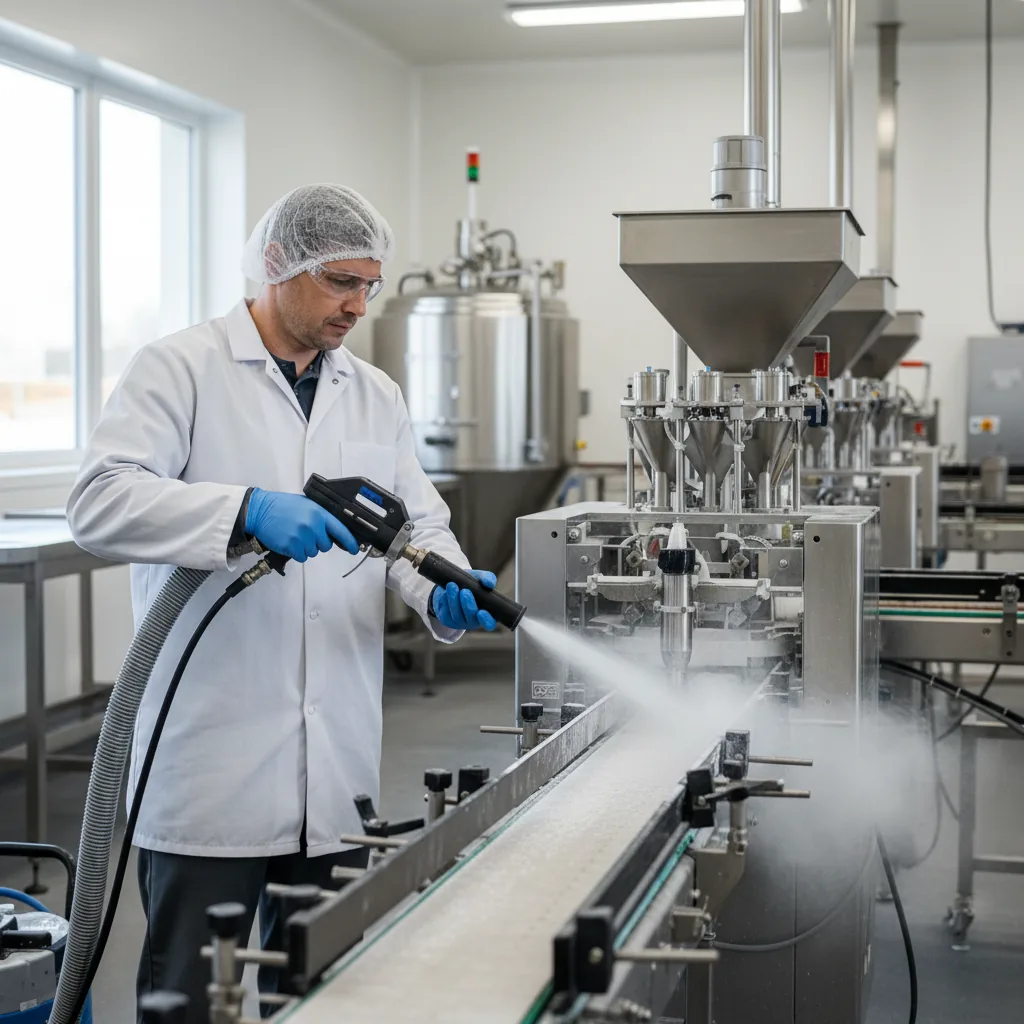
Surfaces, substrates, and equipment
- Processing lines and conveyors
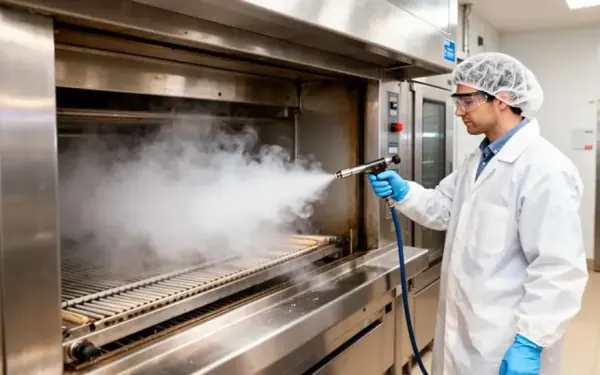
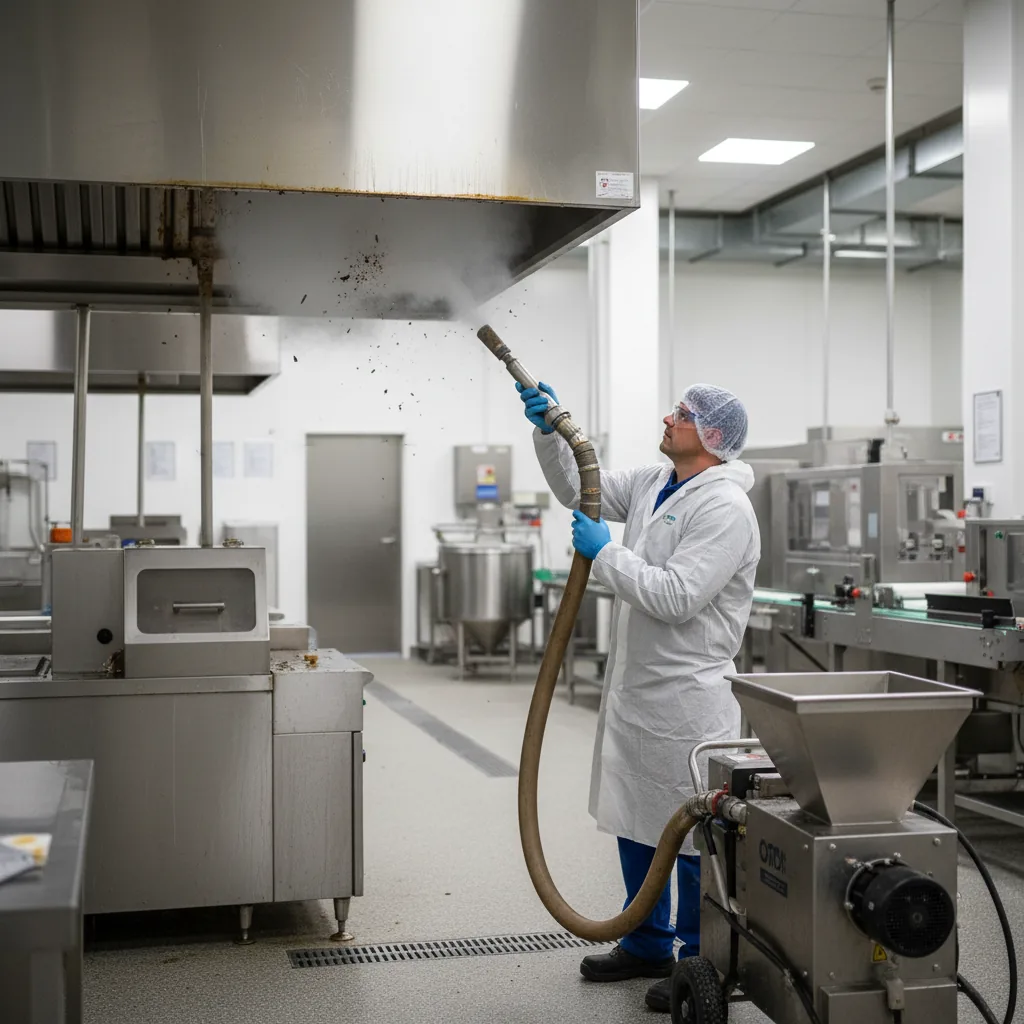
- Ovens, fryers, and hood systems
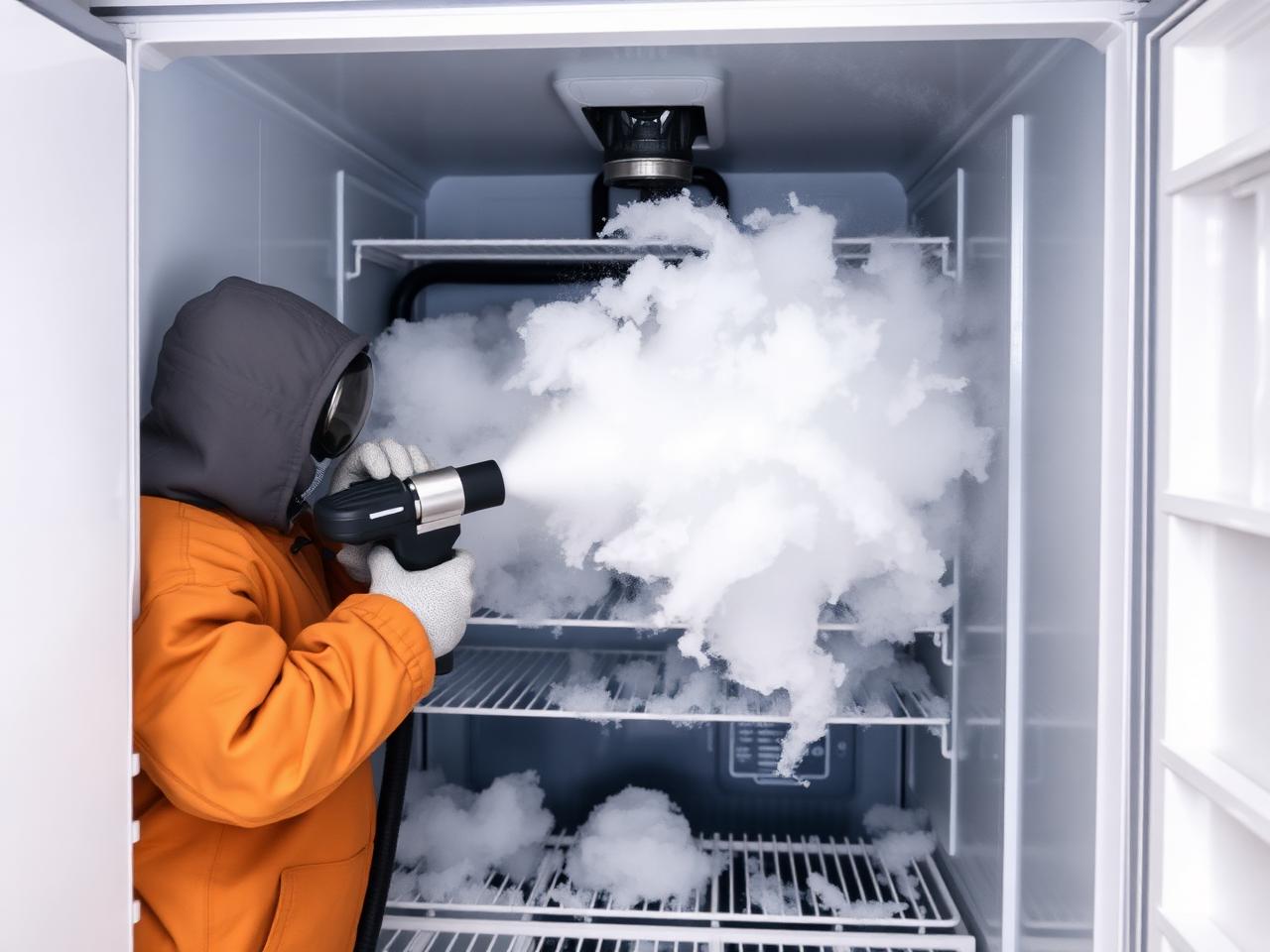
- Walk-in cooler evaporator coils
- Bakery and packaging equipment
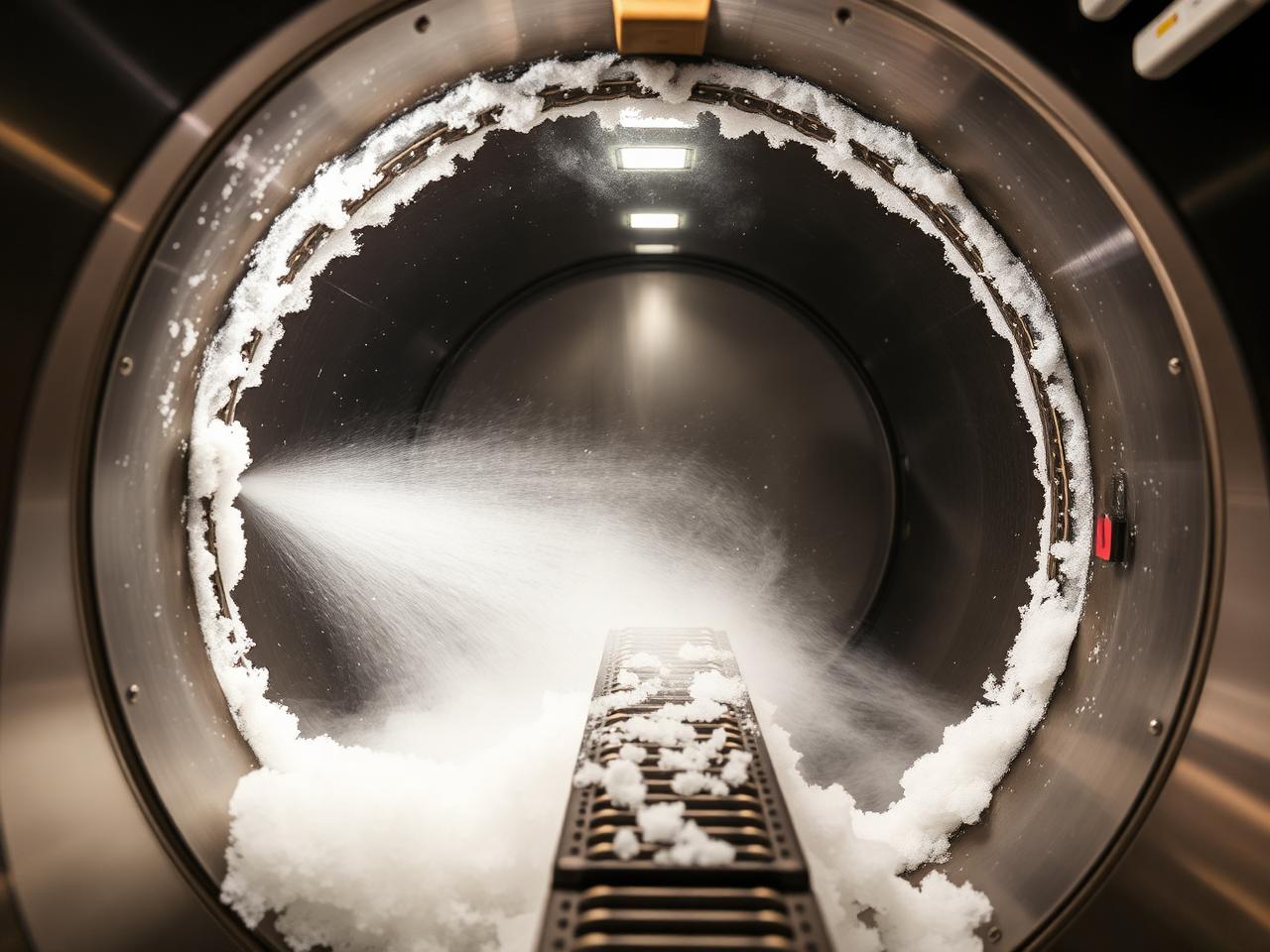
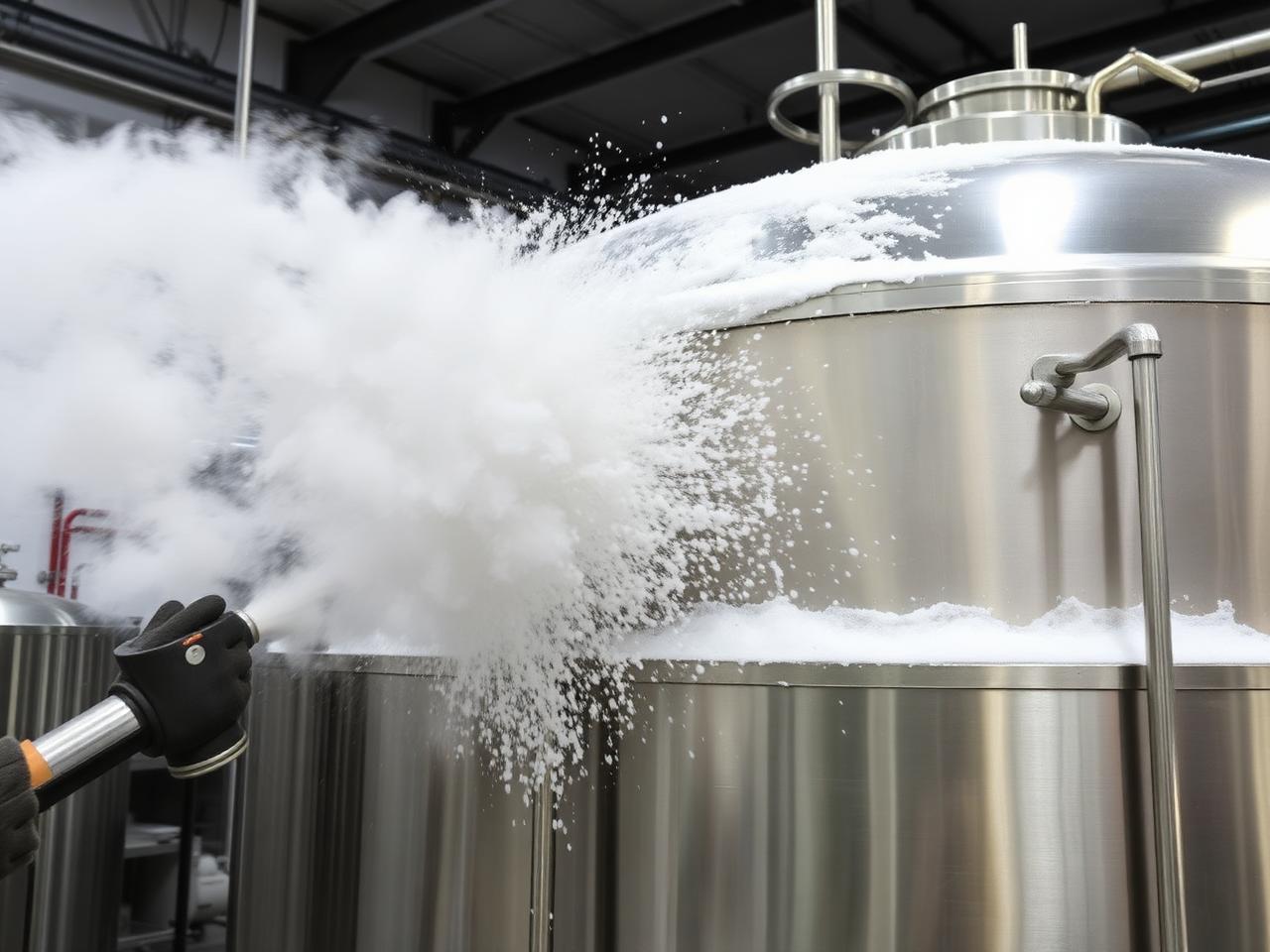
- Stainless tanks and vessels
Technical, not marketing
Food and beverage facilities run some of the tightest cleaning constraints we encounter. Water can create harborage risk in dry-clean zones. Chemical residues raise allergen and cross-contamination concerns. Abrasive media is a non-starter around food-contact surfaces. Dry ice blasting is a mechanical soil-removal step: CO₂ pellets sublimate back to gas, adding no process water and leaving no chemical residue of its own. It is not a sanitizer, and it does not replace your sanitation chemistry.
We work under your site's PPE and sanitation hierarchy, and we leave a documented record of every cleaning pass for your files. Whether dry ice blasting fits a given surface, schedule, or SSOP step is a determination your QA team and sanitarian make — we supply the mechanical clean and the documentation, not the sign-off.
For commercial kitchens, hood and oven cleaning is a recurring maintenance need. Dry ice blasting can clear hood interiors, ovens, fryers, and coil banks of baked-on residue without introducing water or handing kitchen staff a chemical degreaser — but hood/duct systems still need to meet your applicable fire-code cleaning requirements, and we coordinate with your hood-service vendor where that applies.
Outcomes from real jobs
We walk the assets with you before quoting, then send a written scope so there is no ambiguity about what is and isn't included.
We run a test patch on the actual substrate before committing to the full job, so you can see the result before we proceed.
We work inside your maintenance window, subject to site access and ventilation requirements — not the other way around.
Every job closes with a photo record and a time log, so you have documentation on file for your own records.
How we use it — food plant & commercial kitchen cleaning
 Application
 Application
 Application
 Application
 Application
 Application